
Child’s Eye Turning In or Out
Frequent inward or outward turning should be evaluated rather than ignored as a passing habit.
Ask for child eye guidance →When parents or adults search for the “best squint specialist,” they usually want clarity: why the eye is turning, whether glasses are enough, whether lazy eye is present, and when surgery may actually be needed. SGVEH helps guide this decision through structured squint evaluation and follow-up support.
Not every turning eye means the same thing. Early evaluation can help identify whether the issue relates to refractive error, visual development, binocular imbalance or a condition that needs surgical planning.
Frequent inward or outward turning should be evaluated rather than ignored as a passing habit.
Ask for child eye guidance →Adults with new-onset double vision often need proper motility and squint assessment.
Need urgent guidance? →Some children with squint also have amblyopia, which may need treatment along with alignment care.
Read FAQs →In selected cases, the correct spectacle power can significantly improve eye alignment.
See evaluation steps →Surgery is planned only after understanding the type of deviation and treatment goals.
Meet doctors →Treatment quality also depends on review visits and monitoring after the chosen intervention.
Connect with SGVEH →Squint care often overlaps with refraction, amblyopia support, comprehensive ophthalmology and broader eye-care evaluation. SGVEH connects patients with a larger specialist team rather than a one-dimensional pathway.

MBBS, MS (AIIMS New Delhi)
Cataract • Refractive Care • Glaucoma • Neuro-Ophthalmology
View doctor profile →
Ophthalmologist
Holistic Eye Care • Community Ophthalmology • Institutional Direction
View doctor profile →
MBBS, DOMS • Advanced Cornea Training
Cornea • Ocular Surface • Corneal Transplant
View doctor profile →
MBBS, MS
Comprehensive Ophthalmology • Surgical Eye Care • Patient Evaluation
View doctor profile →
SGVEH Consultant
Supports coordinated child and adult eye evaluation within the SGVEH care network.
Explore SGVEH →
SGVEH Consultant
Supports patient counselling, structured eye care and follow-up coordination.
Explore SGVEH →
SGVEH Consultant
Helps patients access structured eye evaluation and support within the hospital network.
Explore SGVEH →
Specialist Eye Care Team
Additional SGVEH doctor support within the broader specialist network for squint and eye care.
Explore SGVEH →
Specialist Eye Care Team
Additional SGVEH doctor support within the broader specialist network for squint and eye care.
Explore SGVEH →
Specialist Eye Care Team
Additional SGVEH doctor support within the broader specialist network for squint and eye care.
Explore SGVEH →
Specialist Eye Care Team
Additional SGVEH doctor support within the broader specialist network for squint and eye care.
Explore SGVEH →“Best squint specialist” is a common search phrase, not a medical guarantee. The right treatment plan depends on the type of squint, age, visual development, binocular function and clinical examination.
The best next step is not the same for every patient. A meaningful squint consultation usually answers these practical questions.
Inward, outward, vertical and intermittent squints are different in behaviour and treatment planning.
Vision in each eye helps identify amblyopia risk and realistic treatment goals.
Some patients improve mainly because the correct power reduces the deviation.
Coordination between the two eyes influences both symptoms and expected outcomes.
Not every patient needs surgery; some need observation, glasses or amblyopia care first.
Review visits help monitor visual development, alignment and any recovery concerns.
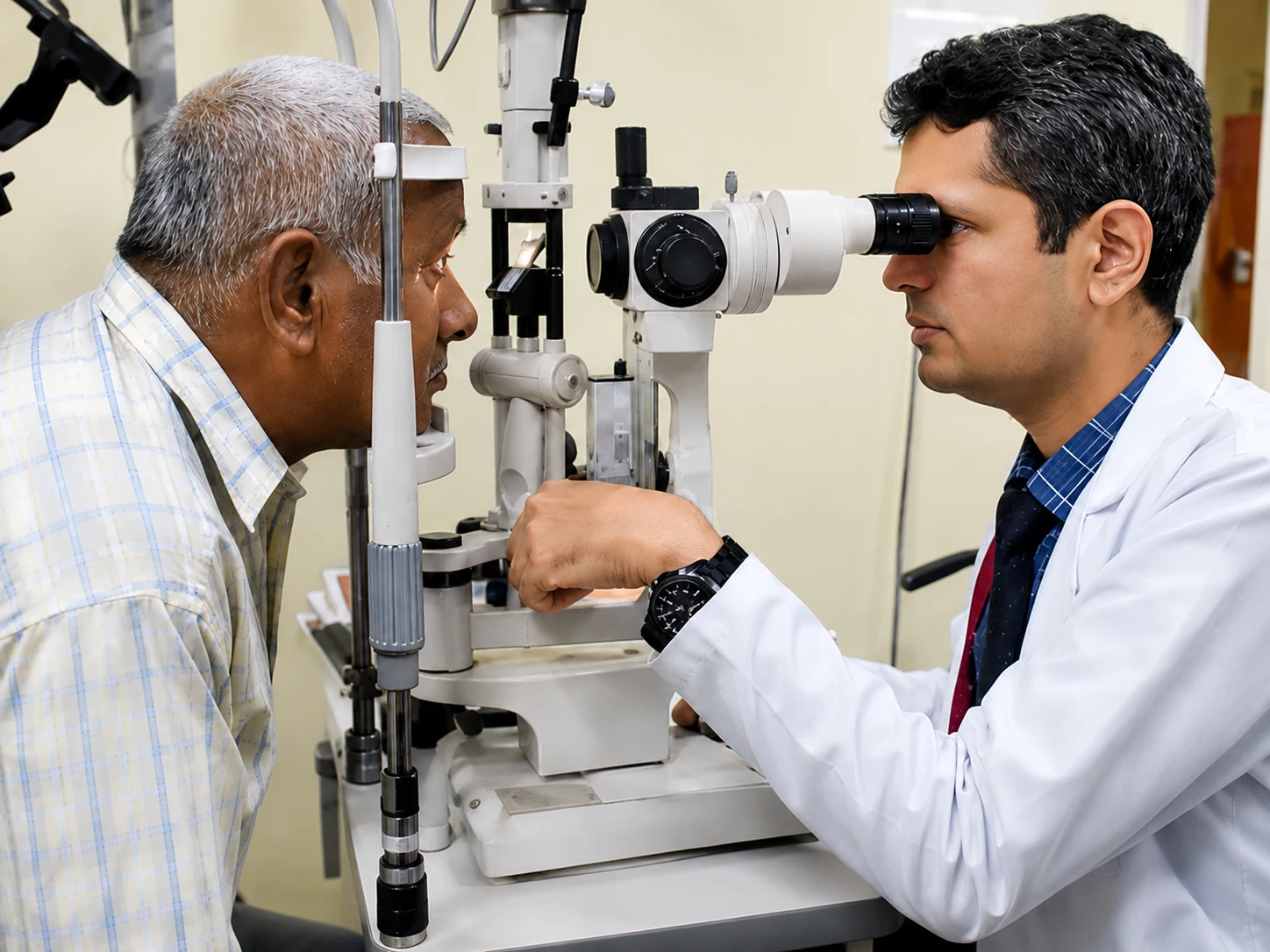
Specialist care is strongest when the process is clear and patient-friendly from the first consultation onward.
Listen to the concern: child’s eye turn, double vision, head posture or cosmetic worry.
Check alignment, refraction, visual development and binocular status.
Recommend observation, glasses, amblyopia support or surgical planning as needed.
Continue follow-up so alignment, healing and visual progress can be reviewed properly.
Refraction, visual assessment and alignment testing help decide whether a patient needs glasses, amblyopia treatment, observation or surgery. Technology matters when it supports the specialist’s interpretation and follow-up decisions.
Short, patient-friendly answers for common questions people search before booking a squint consultation.
Need personalised guidance? →Look beyond a marketing label. Choose a doctor or hospital system that can assess the type of squint, vision in each eye, need for glasses, binocular function and whether the patient needs observation, amblyopia care or surgery.
No. Some children need only glasses, some need treatment for lazy eye and some need observation. Surgery is decided only after checking the cause, angle of deviation, visual development and binocular function.
Yes. Adults may seek care for long-standing deviation, appearance-related concerns, abnormal head posture or double vision. A proper examination is essential before treatment is decided.
In some children and adults, especially where refractive error plays a role, the correct spectacle power can reduce or control the squint. However, not every squint responds to glasses alone.
Important assessment may include refraction, visual acuity, alignment measurement, ocular motility testing, binocular vision assessment and retinal evaluation when clinically needed.
This page is educational and does not rank, certify or guarantee any doctor as objectively “best.” Squint evaluation, child eye care and treatment planning require an in-person eye examination and clinician assessment.
Our team can guide you toward an appropriate SGVEH squint evaluation and treatment pathway in Raipur based on your concern.